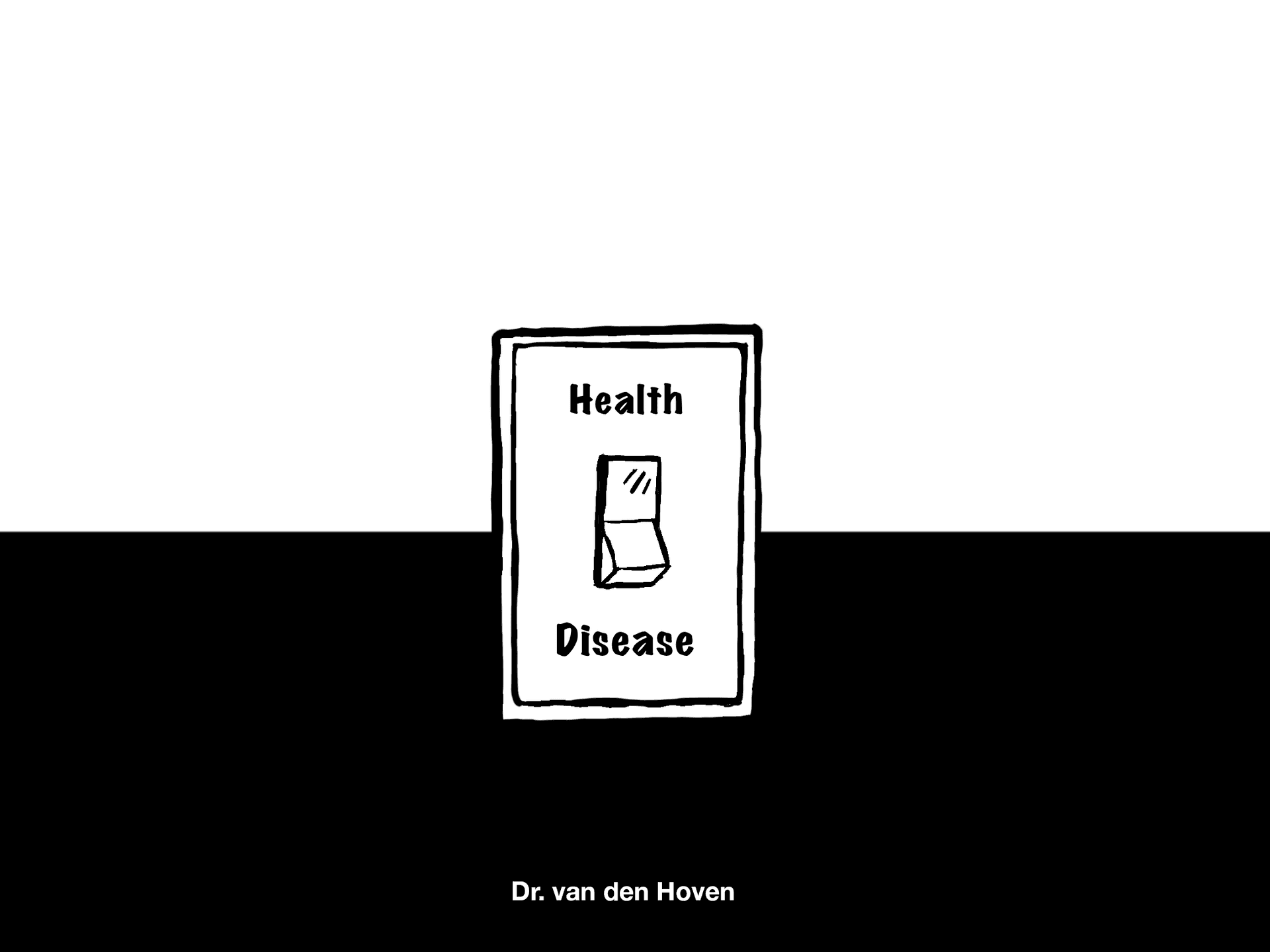
The Flaw in the "Absence of Disease" Model
If your definition of health is simply "not being sick," you're missing the bigger picture. This perspective is flawed in two fundamental ways:
1. It Ignores the Gradual Nature of Illness. A healthy body doesn't suddenly flip into a state of disease. The human body is incredibly resilient, constantly managing a barrage of internal and external stressors in a continuous cycle of damage and repair. Most chronic diseases are the culmination of years of accumulated damage, developing long before the first symptom appears.
Modern science, particularly the field of epigenetics, reinforces this idea. We now know that our genes aren't a fixed destiny. Gene expression—whether a gene is turned "on" or "off"—is dynamic and can be influenced by lifestyle and environment. This shows that health is an ongoing conversation between our genes and our choices, not a predetermined script.
2. It Overlooks the Many Degrees of Well-being. Defining health as "not being sick" is like defining wealth as "not being poor." It's a ridiculously limited view. Just as there are countless degrees of financial prosperity, there are countless shades of physical and mental vitality.
Instead of a switch, imagine health as a dial. There is always room for improvement—to become more energetic, more resilient, or more mentally clear. This model acknowledges that wellness is something to be actively maintained and cultivated, especially as we navigate the natural process of aging.
The Binary Health Fallacy
The "on/off" health model prevents us from understanding the true nature of wellness and our ability to improve it. Health exists on a spectrum, not as a binary state.
The Search for a Better Definition
For centuries, we've struggled to create a comprehensive definition of health that captures its complexity.
WHO Definition (1948)
"A state of complete physical, mental and social well-being and not merely the absence of disease or infirmity"[1]
While this was a vast improvement over previous definitions, it frames health as a perfect, static endpoint rather than the dynamic process it truly is.
More recently, scientists have proposed new models like the "Hallmarks of Health", which seeks to identify and measure the core biological processes that maintain a healthy state—things like homeostasis, stress resilience, and compartmentalization.[2] This approach is powerful because it aims to make health quantifiable. However, it often focuses heavily on physical health, sometimes neglecting the critical role of our mental and emotional states, which profoundly influence our overall well-being.
Hallmarks of Health
The modern scientific approach identifies key biological processes that maintain health:
- Homeostasis: Maintaining internal balance
- Stress Resilience: Ability to adapt to challenges
- Compartmentalization: Proper separation of cellular functions
- Repair Mechanisms: Continuous damage repair processes
Your Health is a Process, Not a Label
So, what's the takeaway? It's time to abandon the on-off switch!
When you start to see your health as a dynamic spectrum — a dial you can influence — you unlock the power to improve your well-being, regardless of your starting point. Every choice, from the food you eat to the thoughts you entertain, turns the dial slightly.
Key Takeaway
Health is not a state you achieve, but a process you engage in, day after day. The journey has no final destination, only a continuous opportunity for growth and improvement.